A Breakthrough Year in Mental Health Research
This article first appeared in the 2025 Annual Update >
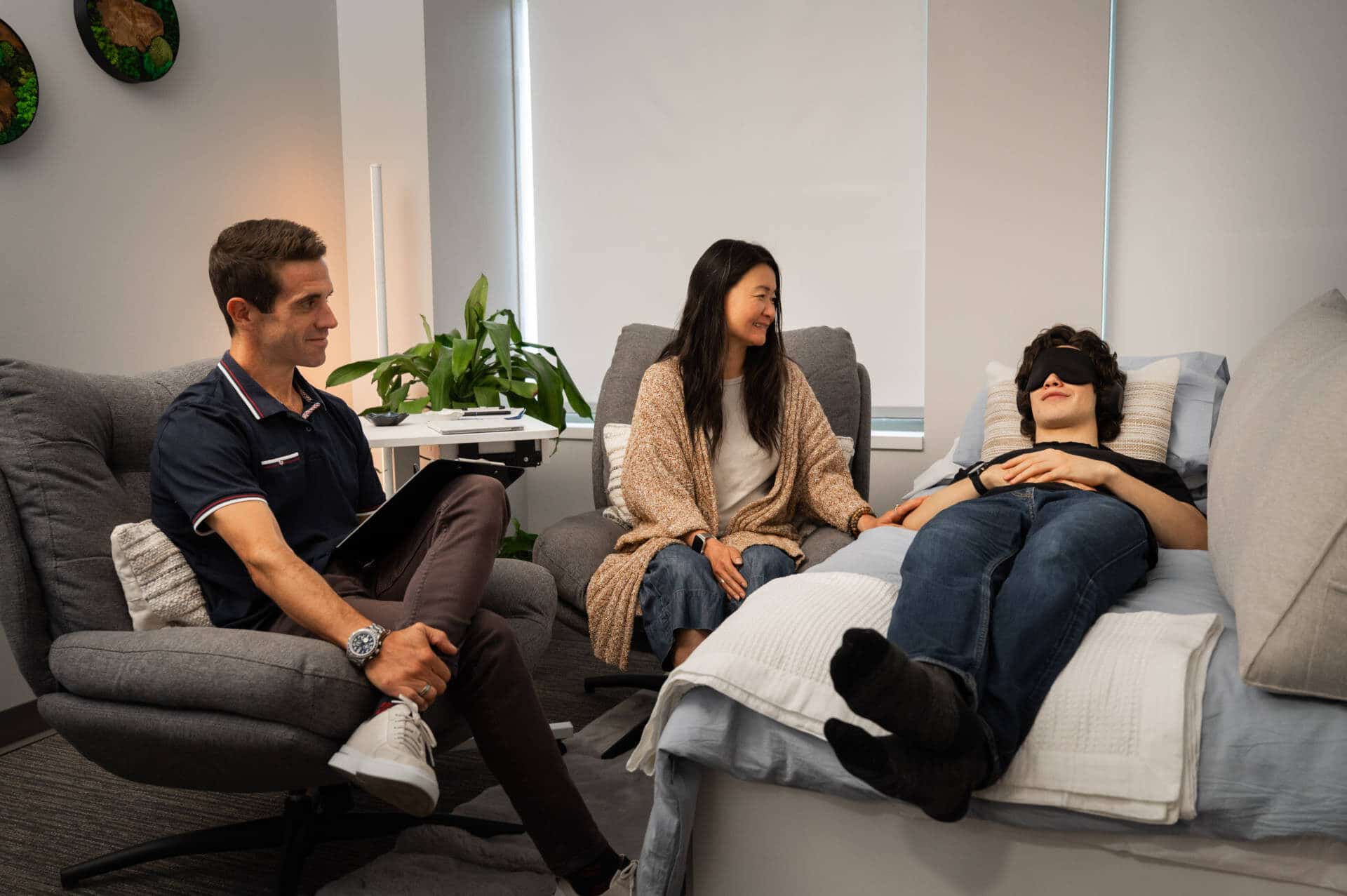
In 2025, the Vail Health Behavioral Health Innovation Center (BHIC) hit several major milestones while expanding its partnership with the University of Wisconsin-Madison. The response from the community was remarkable: Nearly 400 people applied to participate in BHIC studies, with more than 150 completing screenings and dozens receiving treatment for depression.
“This past year represents a fundamental shift in how behavioral health research can operate,” said Dr. Charles Raison, Principal Investigator and BHIC Director. “We’re building a model where rigorous science meets compassionate care, where laboratory findings translate into treatments that reach real lives right here in the Vail Valley.”
CHILL’D Study: Exploring Heat and Cold for Wellness
Dr. Barry Sandler leads the CHILL’D Study (Cold and Heat Investigation to Lower Levels of Depression), which investigates whole-body hyperthermia as a treatment for major depressive disorder. The study had a busy year, processing 153 applications and enrolling 26 participants. By year’s end, 24 individuals had completed treatment.
The enthusiastic community response led to an expansion. BHIC received Institutional Review Board (IRB) approval to include volunteers without depression, which allows researchers to explore broader health and aging benefits. The team also developed Spanish-language materials and moved into the upgraded Wiegers Clinic space.
“The community response has been extraordinary,” said Tina Sauder, Director of Clinical Trials and Regulatory Affairs. “People understand intuitively that physical and mental health are interconnected.”
Collaborations with the University of California, San Francisco, and the Steadman Philippon Research Institute provide additional research expertise.
OPTIMIZE Study: Psilocybin-Assisted Therapy Launches
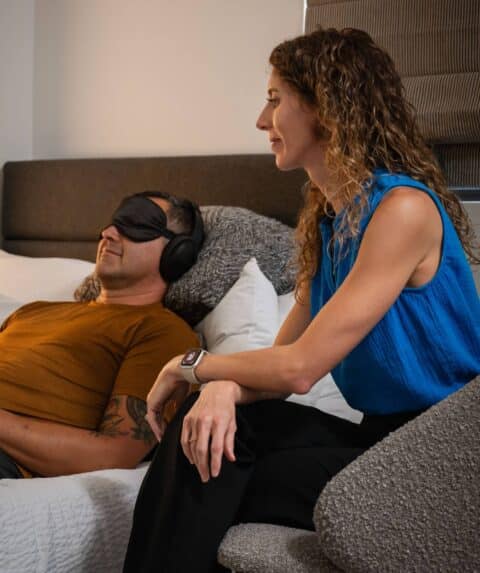
BHIC’s flagship psilocybin-assisted therapy trial opened enrollment in June after completing regulatory approvals, staff training, and facility development. The study completed 11 dosing sessions in 2025.
The study creates one of the most comprehensive behavioral datasets in psychedelic research. Participants contribute daily voice diary entries for two weeks before and four weeks after psilocybin dosing.
More than 25 clinicians, facilitators, and research staff received specialized training. By year’s end, OPTIMIZE had processed 261 applications, completed 88 phone screenings, enrolled 13 participants, and treated 11 individuals. Participants showed exceptional adherence: 88% completion of daytime surveys and 94% completion of voice diary entries.
“The dedication participants bring is remarkable,” Dr. Raison noted. “That level of engagement tells us something important about people’s hunger for treatments that address the roots of suffering.”
Partnerships with Emory University, UW-Madison, University of North Carolina at Charlotte, and University of Groningen provide scientific depth and methodological rigor.
Building Infrastructure
Beyond individual studies, 2025 brought substantial organizational growth. BHIC developed nearly 50 new Standard Operating Procedures and expanded staffing across coordination, facilitation, and research support roles. BHIC-affiliated investigators published papers in leading journals and gained national visibility.
BHIC’s partnership with UW-Madison also advanced significantly. Dr. Raison’s RECAP2 Study investigates how psilocybin affects brain neuroplasticity—the brain’s ability to form new connections. The team navigated complex regulatory processes, completed five psilocybin dosing sessions, built advanced technical capacity in brain imaging, and reached tens of thousands of potential participants through statewide recruitment.
2025 Study Highlights
 CHILL’D STUDY
153 applicants
26 participants enrolled
24 individual completed treatment
 OPTIMIZE STUDY
261 applicants
88 screened by phone
13 participants enrolled
11 Individuals treated